
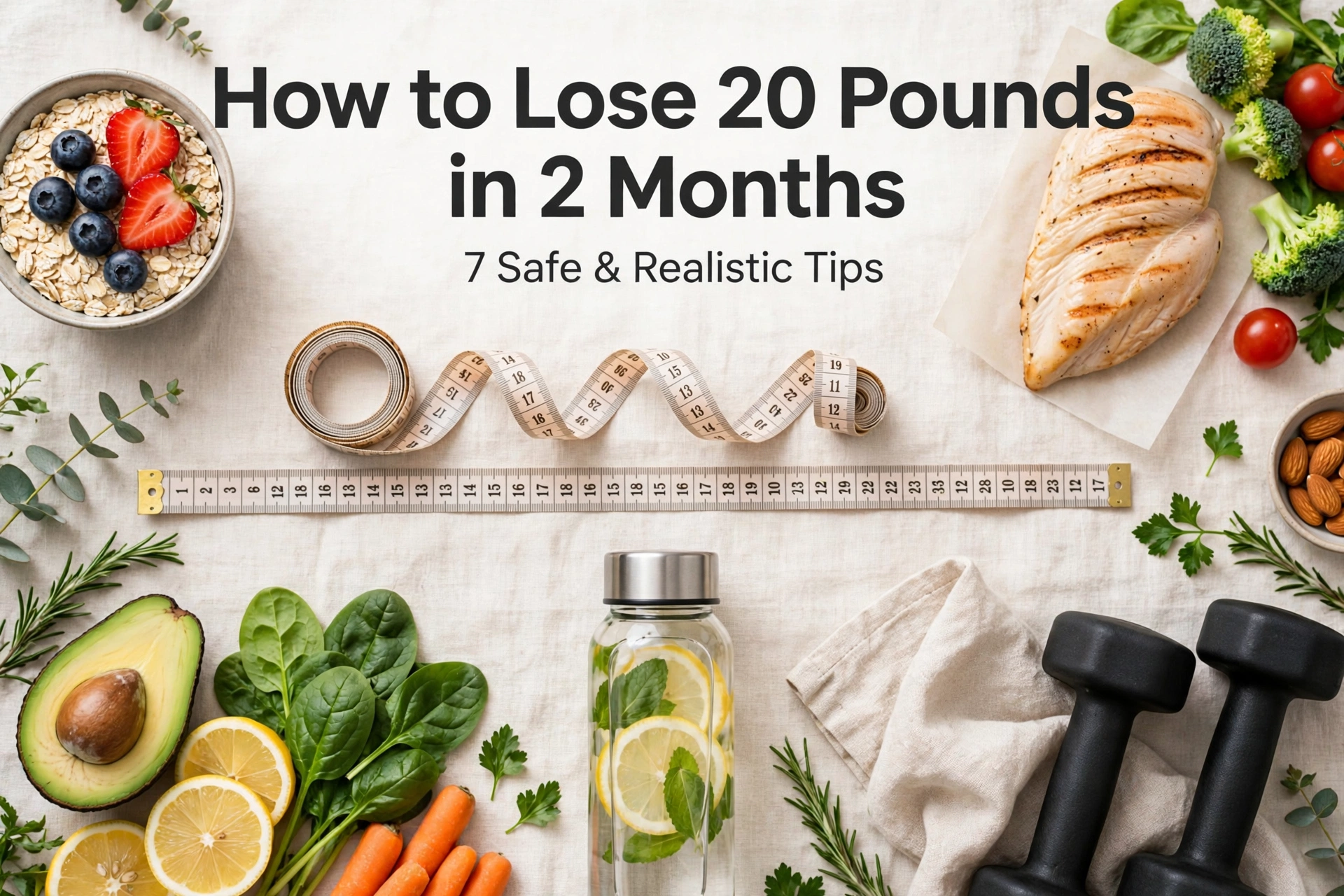
Lose 20 pounds means to lose 2.5 pounds in a week. How to Lose 20 pounds in 2 months is an ambitious goal that requires dedication, consistency, and a smart approach. While it is possible for many people, it is important to understand what it really takes to lose weight safely without harming your metabolism or overall health. In this guide, we will cover everything you need to know about how to lose 20 pounds in 2 months, including diet, exercise, lifestyle habits, and common mistakes to avoid.
Table of Contents
Is It Realistic How to Lose 20 Pounds in 2 Months?
The short answer is yes, but it depends on your starting point. A safe and sustainable rate of weight loss recommended by health experts is 1 to 2 pounds per week. How to lose 20 pounds in 2 months? you would need to lose an average of 2.5 pounds per week, which is slightly above the standard recommendation.
This is more realistic if you have more weight to lose. If you weigh over 180-200 pounds, you may see faster initial weight loss due to water weight and a higher basal metabolic rate. If you are already close to your ideal weight, losing 20 pounds in 2 months will be much harder and may not be healthy.
The key is to create a consistent calorie deficit without starving yourself. One pound of fat equals approximately 3,500 calories. To lose 20 pounds, you need a total deficit of about 70,000 calories over 60 days, which is about 1,166 calories deficit per day through a combination of eating less and moving more.
1. Calculate Your Calorie Deficit The Right Way
Weight loss always comes down to calories in vs. calories out. You must burn more calories than you consume.
First, find your maintenance calories using a TDEE (Total Daily Energy Expenditure) calculator. For example, if your maintenance is 2,400 calories per day, to lose 2.5 pounds per week, you would aim to eat around 1,500-1,700 calories per day, and burn an extra 300-400 calories through exercise.
Never go below 1,200 calories per day for women or 1,500 for men without medical supervision. Eating too little can slow down your metabolism, cause muscle loss, and lead to nutrient deficiencies.
2. Focus on a High-Protein, Whole Foods Diet
You don’t need a fad diet. You need a sustainable eating plan. Protein is your best friend during this journey.
Protein keeps you full for longer, reduces cravings, and helps preserve muscle mass while you lose fat. Aim for 0.7 to 1 gram of protein per pound of your target body weight. Include sources like chicken breast, turkey, eggs, Greek yogurt, fish, lentils, tofu, and low-fat cottage cheese.
Fill half your plate with non-starchy vegetables like broccoli, spinach, peppers, cucumbers, and zucchini. They are low in calories and high in fiber and water.
Replace refined carbs with complex carbs: Choose brown rice, quinoa, oats, sweet potatoes, and whole wheat bread in controlled portions. Avoid sugary drinks, sodas, juices, pastries, and processed snacks. Drinking your calories is one of the biggest reasons for weight gain.
A simple rule: Eat foods that have one ingredient or are made from whole ingredients.
3. Follow the 80/20 Rule for Sustainability
You don’t have to be perfect for 60 days but it is important to know about how to lose 20 pounds in 2 months. If you try to be 100% perfect, you will burn out. Follow the 80/20 rule. Eat clean, nutritious foods 80% of the time, and allow yourself a small portion of your favorite food 20% of the time. This could be a small piece of dark chocolate, a scoop of ice cream on Sunday, or a slice of pizza.
This prevents binge eating and makes the plan sustainable.
4. Combine Strength Training and Cardio
Exercise is crucial to resolve how to lose 20 pounds in 2 months and it is not just for burning calories but for shaping your body. If you only do cardio and diet, you will lose muscle along with fat, which makes you look skinny-fat.
Your weekly workout plan should include:
Strength Training (3-4 times per week): Focus on compound exercises like squats, lunges, push-ups, deadlifts, rows, and overhead presses. Muscle burns more calories at rest than fat does. More muscle means a higher metabolism.
Cardio (3-5 times per week): Include 30-45 minutes of moderate-intensity cardio like brisk walking, jogging, cycling, or swimming. Brisk walking on an incline is extremely effective and easy on the joints.
NEAT (Non-Exercise Activity Thermogenesis): This is the secret weapon. Increase your daily steps to 8,000-12,000. Take the stairs, walk while talking on the phone, park farther away. These small activities can burn an extra 200-300 calories daily.
5. Optimize Your Lifestyle: Sleep, Water, and Stress
Many people fail to lose weight because they ignore these three pillars. These pillars are important for How to Lose 20 Pounds in 2 Months?
Sleep: Lack of sleep increases the hunger hormone ghrelin and decreases the fullness hormone leptin. Aim for 7-8 hours of quality sleep. People who sleep less than 6 hours are 55% more likely to be obese.
Water: Drink at least 2.5 to 3 liters of water per day. Sometimes thirst is mistaken for hunger. Drinking a glass of water before meals can help you eat less. Replace all sugary drinks with water, green tea, or black coffee.
Stress: High stress raises cortisol, a hormone that promotes fat storage, especially around the belly. Practice stress management through deep breathing, 10 minutes of meditation, journaling, or light stretching.
6. Sample 1-Day Meal Plan (Around 1600 Calories)
How to Lose 20 Pounds in 2 Months? To resolve it there is a sample for weight loss plan:
Breakfast (7:30 AM):
2 boiled eggs + 1/2 cup oatmeal with berries + black coffee
Mid-Morning Snack (10:30 AM):
1 apple + 10 almonds
Lunch (1:30 PM):
Grilled chicken breast (150g) + 1 cup brown rice + large green salad with olive oil
Afternoon Snack (4:30 PM): 1 cup Greek yogurt (plain, low-fat)
Dinner (7:30 PM):
Baked salmon or lentil soup + 2 cups roasted vegetables
This plan is high in protein and fiber, keeping you full and energized.
7. Track Your Progress and Avoid Common Mistakes
Track everything. Use an app like MyFitnessPal to track your food for at least the first two weeks. Also track your weight, measurements, and photos. Don’t just rely on the scale, as water weight fluctuates. Measure your waist, hips, and take progress photos every 2 weeks.
Common mistakes that stop weight loss:
- Underestimating liquid calories and sauces.
- Not getting enough protein.
- Doing only cardio and no strength training.
- Weighing yourself every day and getting demotivated.
- Giving up after one bad meal. One bad meal will not ruin 2 months of effort.
Conclusion
How to Lose 20 pounds in 2 months is challenging but achievable with the right mindset and plan. It requires a daily calorie deficit of around 1000-1200 calories, a diet rich in protein and whole foods, a mix of strength training and cardio, 8k-12k daily steps, and 7-8 hours of quality sleep.
Remember, the goal should not just be to lose 20 pounds quickly, but to build habits that help you keep it off permanently. Quick fixes never work long-term. Focus on consistency over perfection. If you slip up one day, just get back on track the next meal.
Start today, stay consistent for how to lose 20 pounds in 2 months, and you will be amazed at how different you feel and look.
Frequently Asked Questions
1. Is it possible to lose 20 pounds in 2 months?
Yes, it is possible to lose 20 pounds in 2 months if you have more weight to lose. It requires losing about 2.5 pounds per week through a calorie deficit of around 1,100 calories per day with a combination of diet and exercise. However, it is an aggressive goal and should be done in a healthy way.
2. How many calories should I eat to lose 20 pounds in 2 months?
It depends on your maintenance calories. Most women will need to eat around 1,300-1,700 calories and most men around 1,700-2,000 calories per day to lose 20 pounds in 2 months. Never eat below 1,200 calories for women and 1,500 for men without medical supervision. Use a TDEE calculator to find your exact number.
3. Can I lose 20 pounds in 2 months without exercise?
You can, but it is much harder and not recommended. Weight loss is 80% diet and 20% exercise. Without exercise, you will need a very strict diet, and you will lose muscle mass along with fat. Combining strength training and cardio helps you burn fat faster, preserve muscle, and keep the weight off.
4. How much water should I drink to lose 20 pounds?
Drink at least 2.5 to 3 liters (80-100 oz) of water per day. Drinking water before meals helps you eat less, boosts metabolism, and flushes out toxins. Replace all sugary drinks, sodas, and juices with water, green tea, or black coffee.
5. What is the best diet to lose 20 pounds in 2 months?
There is no one “best” diet. The best diet is one you can stick to. Focus on a high-protein (0.7-1g per lb), high-fiber, whole foods diet. Eat lean proteins, vegetables, fruits, and whole grains. Avoid processed foods, sugar, and liquid calories. The key is a consistent calorie deficit.
6. Will I have loose skin after losing 20 pounds in 2 months?
If you lose 20 pounds in 2 months, mild loose skin is possible, especially if you lose it very fast. You can minimize it by: drinking plenty of water, doing strength training to build muscle, losing weight at a steady pace (not crash dieting), and eating enough protein and collagen-rich foods.
7. How can I maintain my weight after losing 20 pounds?
To avoid regaining weight, don’t go back to your old eating habits. Slowly increase your calories to maintenance level (reverse dieting), continue strength training 3-4 times a week, keep your daily steps high (8k-10k), and continue tracking your food 80% of the time.
Disclaimer
This article is for informational and educational purposes only and is not intended as medical advice. The information provided is not a substitute for professional medical advice, diagnosis, or treatment. Always seek the advice of your physician or other qualified health provider with any questions you may have regarding a medical condition or weight loss program.